Here are some pictures of prototypes of the Malenki-Nano.


 Unfortunately this prototype died a fiery death caused by a short circuit connected to a lipo.
This was a lot bigger than it needed to be, so I looked for other motor drivers to replace the (excellent, reliable) rz7899.
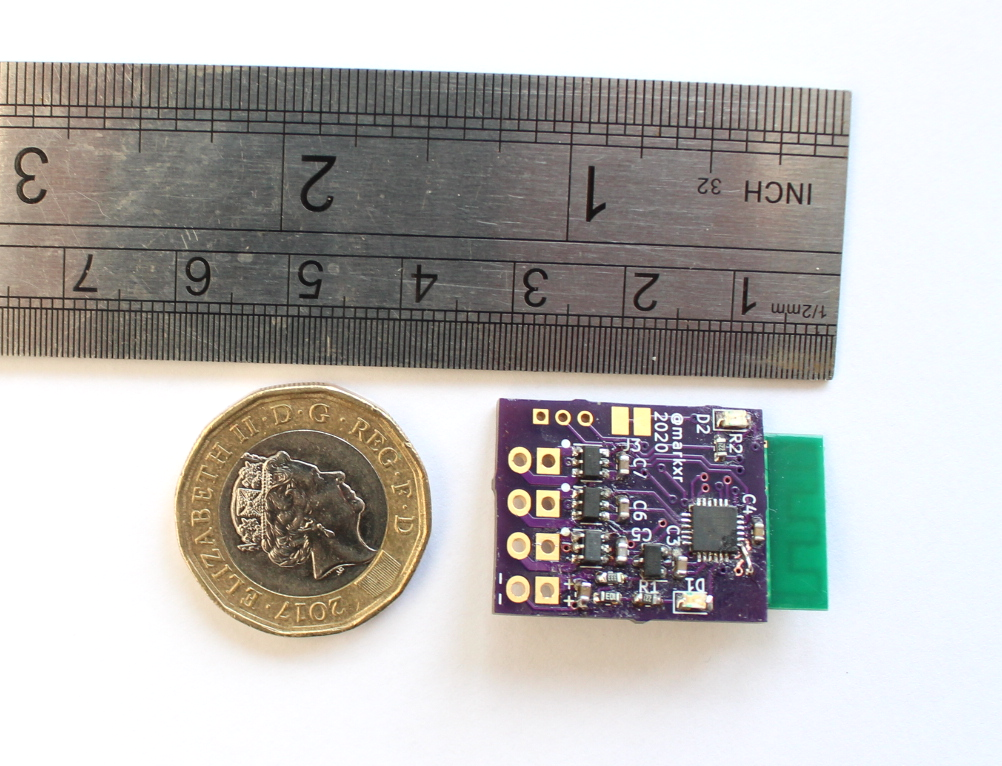
 This hand-soldered prototype uses the mx113l motor drivers, which are in a little sot23-6 package, but don't handle as much current as the later ones.
Soldering the attiny3217 was quite tricky (no pins, 0.5mm pitch pads)
This board unfortunately had a couple of design mistakes which were not easily corrected - I added a bodge wire to make the radio work, but the weapon channel is still broken.
It still drives ok and I use it to test firmware in a robot (pictured).


Prototype 0
This was a veroboard / stripboard which was already used for development of my earlier ESC. The MCU was atttiny1614, and the radio module was "dead bug" installed with hot glue and bodge wires.
Motor drivers were mostly none, but I did add a rz7899 on a breakout board at some point. There are various sockets in the front side of the board and quite a few LEDs, I can't remember why I put them all there or what plugged in where.


Prototype 1
I created a PCB with rz7899 motor drivers x3 and components on both sides. It used the attiny1614 which was hand-soldered quite easily due to its 1.27mm pitch.

This was a lot bigger than it needed to be, so I looked for other motor drivers to replace the (excellent, reliable) rz7899.
Prototype 2

Soldering the attiny3217 was quite tricky (no pins, 0.5mm pitch pads)
This board unfortunately had a couple of design mistakes which were not easily corrected - I added a bodge wire to make the radio work, but the weapon channel is still broken.
It still drives ok and I use it to test firmware in a robot (pictured).
Prototype 3
I finally got it right! The motor drivers are now drv8837d which are really tiny and drive 1.8 amps. Hand-soldering this prototype was not easy and I broke one board completely before I made this prototype work.

Production board
The first production run. These were panelised with 2 boards per panel, so you can see the "mouse bites" where they were separated. A machine soldered these ones.

Programming pins rig
I made this rig to do programming and testing, to avoid the need to clip / unclip at least three test clips (without creating any shorts...)


I can hold the pins down with a test-device, then wait while the firmware is written. It then automatically starts in a special test mode which flashes all the LEDs on the programmer (using the motor drivers) so that I know all the motor drivers are working ok.